
It’s understandable to feel overwhelmed if you’ve been diagnosed with a skull base tumor. It can be a stressful diagnosis, particularly because of the proximity to the spinal cord. But you don’t have to navigate this time alone. Our team of specialists at California Sinus Centers will make sure you receive the highest quality treatment while feeling supported from initial diagnosis to recovery.
Do I Need Skull Base Surgery?
Not all skull base conditions require surgery. You can talk to California Sinus Centers to see if skull base surgery is the right option for you.
In some cases, skull base tumors are benign or noninvasive. They may, however, start to put pressure on major nerves if they grow. Often, skull base surgery can help remove these types of tumors to help preserve nerve function.
Skull base surgery is also a viable option if you have a cancer growth that needs to be removed.
What Are the Benefits of Skull Base Surgery?
Prior to the development of skull base surgery, it was necessary to remove relatively large portions of the skull to enter the necessary area.
The benefits of skull base surgery include:
- less risk of infection
- less damage to cerebral structures and nerves
- less risk of disfigurement
- shorter recovery time
How Is Skull Base Surgery Performed?
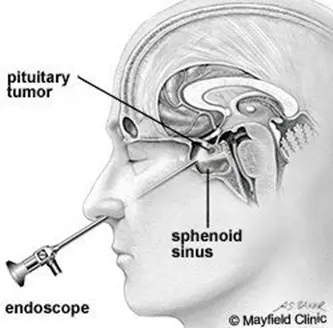
Skull base surgeons use special instruments inserted through the skull’s natural openings to operate rather than accessing the brain through a surgical opening of the skull.
This means California Sinus Centers will gain access through your nose, mouth, or above your eyes.
Common skull base surgery approaches include:
- Trans-nasal: entering through the nostrils
- Trans-oral: entering through the mouth
- Supra-orbital: entering just above the eyebrow through a small opening in the skull
Surgeons may also enter through the ear, low on the temple beneath the brain, around the eye or from the neck.
Endoscopic Skull Base Surgery
This minimally invasive approach allows abnormalities in the skull base to be accessed through the nose and sinuses with cameras and endoscopes. With this technique, surgeons can treat many difficult-to-reach tumors without facial incisions or openings in the skull.
How Is Skull Base Surgery Different from Traditional Skull Surgery?
Traditional techniques often require significant force to retract the brain out of the way. This can sometimes lead to damage to normal brain tissue.
For example, if you have a tumor that is at the skull base, it can be difficult during surgery to access the tumor and remove it.
Skull base surgery is approaching the tumor from underneath or from the side by removing specific areas of the skull base bone. This allows them to expose the tumor with little brain retraction.
The overall goal of this minimally invasive skull surgery is to maximize tumor removal while preserving your brain and neurological function as much as possible.
Call California Sinus Centers for more information or to schedule an appointment.